Knowing a simple hair care routine for kids saves time and energy when caring for our kids hair, these routines and process help moms know what work best for .
And if getting your child’s hair ready for school sometimes feels like a task of its own, mom, you are not alone. One morning, the hair looks fine. The next morning, you are dealing with knots, dry ends, missing hair accessories, and a child who suddenly remembers every other thing she needs to do except sitting still for her hair to be combed.
And wash day? That can be a completely different story.
For some parents, the challenge is finding a way to keep their child’s hair neat without spending too much money on products. Others struggle with tangles, breakage, dry hair, or a child who cries whenever a comb comes near her head.
The good news is that a kids’ hair care routine does not have to be complicated. You do not need a cupboard full of products or a different hairstyle every day. What matters most is learning how to clean your child’s scalp, condition the hair when needed, handle tangles gently, and choose hairstyles that do not pull painfully at the roots.
This guide explains how to build a simple kids’ hair care routine for children, including children with curly and coily natural hair. You will learn how often to wash, how to moisturize, how to detangle without unnecessary pulling, and which common mistakes to avoid.
The aim is simple: make hair care easier for you and more comfortable for your child.
Why Do Children Need a Simple Hair Care Routine?
Children’s hair needs regular care, but the routine should suit the child’s age, hair texture, scalp, and daily activities.
For example, a child who plays outside frequently may need more frequent scalp cleansing than a child who spends most of the day indoors. A child with fine, straight hair may not need the same moisturizing products as a child with thick, tightly coiled hair.
There is no single routine that works perfectly for every child.
A good routine should help you:
-
Keep the scalp clean without unnecessary dryness.
-
Reduce tangles and avoid rough combing.
-
Minimize breakage caused by pulling and friction.
-
Keep the hair manageable between wash days.
-
Protect the hairline from tight hairstyles.
-
Teach your child simple habits that encourage independence.
Remember that healthy-looking hair does not depend on how many products you use. Gentle, consistent care is a better starting point than constantly changing products in search of a miracle solution.
1. Start With the Right Hair Care Products
Before buying another hair cream because someone said it made their child’s hair grow, take a moment to consider what your child actually needs.
A basic routine can begin with three essentials:
-
A gentle shampoo: Choose one suitable for your child’s age and hair type. Its job is to clean the scalp and remove sweat, dirt, and product buildup.
-
A conditioner: Conditioner helps soften the hair and makes detangling easier. It is especially useful for dry, curly, and coily hair.
-
A suitable leave-in conditioner or detangler: Depending on your child’s hair texture, this can help make the hair easier to manage between washes or during detangling.
You may also need a wide-tooth comb, soft hair ties, and a towel that allows you to pat the hair dry without vigorous rubbing.
You do not necessarily need all these products at once. If your child’s hair is already easy to manage with shampoo and conditioner, begin there and add another product only if there is a genuine need.
Should you buy expensive children’s hair products?
Not necessarily.
An expensive product is not automatically better for your child’s hair. Look for products that suit the child’s hair and scalp, follow the instructions on the label, and stop using a product that causes irritation.
Avoid assuming that a product advertised as natural, herbal, or chemical-free is automatically safe or effective. Ingredients and individual sensitivities matter.
For young children, use products intended for their age group and keep them away from the eyes and mouth.
2. How Often Should You Wash Your Child’s Hair?
This is one of the most common questions parents ask, and the answer depends on the child.
Hair texture, age, activity level, scalp oiliness, and the use of styling products all affect how often washing is needed.
Children with oily scalps or straight hair may need more frequent washing. Dry, curly, or coily hair often needs less frequent shampooing because frequent washing can leave it feeling drier.
The American Academy of Dermatology provides age- and hair-type-specific guidance for children aged 8–12. Its recommendations include less frequent shampooing for dry, curly hair and adjustments based on how the scalp and hair respond.
You can read its guidance in How Often Do Children Need to Wash Their Hair?.
Rather than following a strict schedule simply because another parent does, check your child’s hair and scalp.
Consider washing when:
-
The scalp becomes sweaty or noticeably oily.
-
Dirt or styling-product buildup is present.
-
The hair smells unpleasant despite ordinary care.
-
The scalp needs cleaning after swimming or heavy sweating.
If your child has persistent itching, flaking, or unusual scalp changes, do not assume that more frequent washing will solve the problem.
A simple wash-day routine
-
Step 1: Prepare the hair. Remove accessories and gently separate obvious tangles if possible. If the hair is tightly tangled, do not force a comb through it before adding water and a suitable conditioner or detangler.
-
Step 2: Wet the hair thoroughly. Use comfortably warm water rather than very hot water.
-
Step 3: Clean the scalp gently. Apply a small amount of shampoo and massage it into the scalp using your fingertips. Avoid scratching with your nails or rubbing the lengths of the hair aggressively.
-
Step 4: Rinse thoroughly. Make sure the shampoo is removed. Leftover product may irritate the scalp.
-
Step 5: Apply conditioner when appropriate. Follow the product instructions and concentrate on the lengths and ends if these areas are prone to tangling or dryness.
-
Step 6: Rinse or leave the product in as directed. A rinse-out conditioner and a leave-in conditioner are not interchangeable. Use each according to its instructions.
-
Step 7: Remove excess water gently. Pat or squeeze the hair with a soft towel. Avoid rubbing it vigorously.
The American Academy of Dermatology explains these basic washing and handling practices in Teaching Your Child Healthy Hair Care Habits.
3. How to Moisturize Children’s Hair Without Overdoing It
Dry hair can be frustrating, especially when the ends become rough, tangled, or difficult to comb a day or two after wash day.
This is particularly familiar to parents caring for curly and coily hair. The bends and coils can make it harder for natural scalp oils to travel along the entire hair strand, so the lengths and ends may feel drier than the roots.
However, dry hair does not automatically mean that your child needs more oil.
What helps keep hair manageable?
Start with water and conditioner rather than relying on oil alone.
Depending on your child’s hair type, a simple approach may include:
-
Using a suitable conditioner during wash day.
-
Applying a small amount of leave-in conditioner to damp hair if needed.
-
Separating the hair into manageable sections before styling.
-
Refreshing dry, tangled areas with a little water and a suitable detangling product.
-
Avoiding repeated application of heavy creams and oils when they leave the hair greasy or coated.
Oil can help lubricate the hair and reduce friction, but it does not replace washing or conditioning. You do not need to keep applying more products every time the hair feels difficult to manage.
How can you tell if you are using too much product?
Watch for a greasy scalp, heavy buildup, hair that feels coated, or a routine that requires frequent extra washing to remove the products.
If you notice these problems, simplify the routine. Use less product and see whether the hair becomes easier to manage.
The goal is not to make the hair look shiny at all times. It is to keep the hair clean, comfortable, and manageable without unnecessary buildup.
4. How to Detangle Children’s Hair Without Tears
For many families, detangling is the hardest part of the entire routine.
A child may be happy to wash her hair but start complaining as soon as combing begins. A parent may try to finish quickly, pull through a knot, and unintentionally cause pain. The next time, the child is already nervous before the comb touches her head.
The answer is not to force the child to endure painful combing. It is to change the way the hair is handled.
Follow these steps for easier detangling
-
Step 1: Work in small sections. Divide the hair into several manageable sections. This is particularly helpful for thick, curly, or coily hair.
-
Step 2: Add slip. Use a suitable conditioner or detangling product to help the comb move through the hair. Follow the product instructions and use the approach that works best for your child’s texture.
-
Step 3: Hold the hair above the knot. Gently hold the section between your fingers, closer to the roots than the tangle. This reduces the amount of pulling transferred to the scalp.
-
Step 4: Start at the ends. Remove the small knots at the ends first. Work gradually upward instead of dragging a comb from the roots to the ends.
-
Step 5: Use a wide-tooth comb or suitable detangling brush. Choose a tool that moves through the hair without excessive pulling. For tightly coiled hair, a conditioner-assisted detangling session may be more comfortable than trying to comb the hair dry.
-
Step 6: Pause when necessary. If your child complains of pain, stop and reassess the section. Add more detangling product if appropriate, divide the section into smaller parts, or take a short break.
Nationwide Children’s Hospital provides practical advice in its Patient Hair Care guide.
What if your child’s hair is badly tangled?
Do not immediately reach for scissors or try to pull the knots apart by force.
Work through the hair slowly with an appropriate conditioner or detangler. If the hair is severely matted and you cannot separate it without causing pain or damage, consider getting help from a professional who is experienced with children’s hair.
A useful reminder for parents: the aim is not to finish detangling as quickly as possible. The aim is to remove knots while protecting the child’s comfort and hair.
5. Build a Morning and Bedtime Routine That Prevents Tangles
You do not need to wash your child’s hair every morning to keep it neat.
For many families, a few simple habits can make a noticeable difference to how manageable the hair feels.
In the morning
-
Check whether the hair needs a light refresh or simply needs styling.
-
Use a little water or a suitable detangler when needed.
-
Smooth or separate the hair gently rather than pulling through knots.
-
Choose a comfortable style that will stay manageable during school and play.
-
Avoid repeatedly brushing or combing hair that is already neat.
If your child is going to school, prepare the comb, accessories, and styling products before beginning. Keeping everything within reach can make the routine less stressful.
At bedtime
-
Remove accessories that pull or rub uncomfortably.
-
Gently arrange the hair in a loose style if it is long enough.
-
Consider a smooth satin pillowcase or suitable satin covering if it helps reduce friction.
-
Avoid tying the hair tightly before sleep.
The exact routine will depend on your child’s hair texture and preferred style. Fine hair may need very little nighttime preparation, while longer curly or coily hair may benefit from gentle sectioning or loose twists.
The point is to reduce unnecessary tangling without turning bedtime into another long hair-care session.
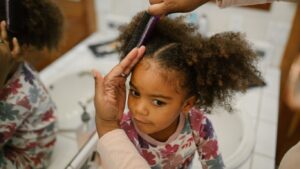
6. Choose Hairstyles That Protect the Hair, Not Just the Appearance
A neat hairstyle can look beautiful and still be uncomfortable.
This is especially important when children wear braids, cornrows, ponytails, buns, or styles with synthetic hair attachments. Whether you style your child’s hair at home or visit a salon, always ensure the tension around the edges and scalp remains gentle.
A hairstyle should not cause persistent pain, headaches, stinging, bumps, or a feeling that the scalp is being pulled. These are clear signs that the style is too tight.
The American Academy of Dermatology warns that repeated tension from tight braids, ponytails, buns, and extensions can contribute to traction alopecia, a type of hair loss caused by pulling on the hair.
Read more in quick morning hairstyle foe school:5- minutes ideas.
Hair-care tips when choosing children’s hairstyles
-
Choose loose braids or twists rather than styles that pull tightly at the roots or hairline.
-
Avoid adding heavy extensions that place unnecessary weight on the hair.
-
Do not ignore a child’s complaint that a hairstyle hurts.
-
Take down or loosen a style that causes pain or scalp irritation.
-
Give the hair a break between styles that place tension on the same areas.
-
Check the hairline and scalp regularly for broken hairs, bumps, or thinning.
If you use synthetic attachments, pay particular attention to their weight, how tightly the natural hair is braided, and whether the child experiences discomfort.
There is no need to sacrifice a child’s scalp health for a hairstyle that is meant to last longer.
7. Common Hair-Care Mistakes Parents Should Avoid
Sometimes the problem is not that a parent is doing too little. It is that a well-intentioned habit is making the hair harder to manage.
Here are some common mistakes to reconsider.
Mistake 1: Combing too aggressively
Pulling through knots can cause breakage and make children anxious about future hair-care sessions.
Try instead: work in sections, use an appropriate conditioner or detangler, and begin at the ends.
Mistake 2: Using too many products
Buying another cream every time the hair looks dry can create buildup without solving the underlying problem.
Try instead: begin with a gentle shampoo and suitable conditioner, then add products only when needed.
Mistake 3: Washing according to another child’s schedule
Your neighbor’s child may need frequent washing, while your child’s scalp may remain comfortable for longer.
Try instead: adjust the schedule according to hair texture, activity, and scalp condition.
Mistake 4: Assuming oil alone will moisturize the hair
Oil can help reduce friction, but it does not replace cleansing and conditioning.
Try instead: use water, conditioner, and a suitable leave-in product as appropriate for the hair.
Mistake 5: Keeping a painful hairstyle because it was costly or time-consuming
It can be disappointing to remove a hairstyle shortly after paying for it at a salon or spending hours braiding. However, a painful style is not worth risking damage to your child’s hairline.
Try instead: loosen the style or remove it if it continues to hurt.
Mistake 6: Expecting hair to grow faster because of a product
Hair length depends on factors such as genetics, the hair-growth cycle, and overall health. A routine can help reduce breakage and preserve length, but no ordinary oil or cream can guarantee unusually fast growth.
Try instead: focus on gentle handling, a healthy scalp, and preventing avoidable damage.
8. When Should You Seek Professional Advice?
Ordinary tangles and occasional dryness can often be managed with changes to the hair-care routine. However, some scalp and hair problems need more than a different shampoo.
Speak with a qualified healthcare professional if your child develops:
-
Persistent itching, redness, swelling, or scalp pain.
-
Scaly patches, sores, or crusting.
-
New bald patches or unexplained hair loss.
-
Noticeable thinning around the hairline.
-
Hair loss that continues despite avoiding tight hairstyles.
-
A scalp problem that is getting worse rather than improving.
Hair loss in children can have several causes, including scalp conditions and repeated tension from hairstyles. Do not automatically assume that every bald patch is caused by braiding or that oil will treat it.
For more information, the American Academy of Pediatrics explains common causes of childhood hair loss in its Hair Loss (Alopecia) guide.
9. Frequently Asked Questions About Kids’ Hair Care
How often should I moisturize my child’s hair?
There is no universal daily schedule. Some children’s hair needs a little refreshing between washes, while other hair types remain manageable with less frequent product application. Adjust according to how the hair feels and avoid heavy buildup.
Should I comb my child’s hair every day?
Not necessarily. Some hair types benefit from daily gentle styling, while others can become more tangled or break if they are repeatedly manipulated. Focus on removing tangles when needed and handling the hair gently.
Is coconut oil good for children’s hair?
Coconut oil may help lubricate some hair types and reduce friction. However, it will not suit every child or solve every hair problem. Use it cautiously if your child has sensitive skin, stop if irritation occurs, and remember that oil does not replace shampoo or conditioner.
How can I make my child’s natural hair easier to manage?
Start with gentle cleansing, suitable conditioning, section-by-section detangling, and comfortable hairstyles. For curly and coily hair, reducing friction and avoiding unnecessary pulling can make daily care easier.
Why does my child’s hair keep breaking?
Breakage can result from rough detangling, friction, heat, chemical treatments, or hairstyles that pull too tightly. Persistent breakage or visible thinning deserves professional assessment, especially when the cause is unclear.
Can braids help protect children’s hair?
Braids can reduce the need for daily styling, but they are not automatically protective. Tight braids, heavy extensions, and repeated tension can damage the hairline. Choose comfortable styles and remove them if they cause pain or irritation.
Conclusion: Keep Your Child’s Hair Care Routine Simple
A good kids’ hair care routine is not about having the most products, the longest wash day, or the most elaborate hairstyle.
It is about understanding your child’s hair, keeping the scalp clean, conditioning when needed, detangling patiently, and choosing styles that do not cause unnecessary tension.
Start with the basics. Observe how your child’s hair responds, make adjustments when necessary, and avoid comparing your routine with another family’s routine.
Most importantly, remember that hair care should not become a daily battle between parent and child. Allow enough time, explain what you are doing, and give your child age-appropriate opportunities to participate. You can check our guide on age appropriate routine for kids
Healthy hair habits develop gradually. With a simple, consistent routine, you can make hair care more comfortable, protect against avoidable breakage, and help your child feel more confident about caring for their own hair.
At Honeyberry, we believe everyday mom knows what works best when practical care, patience, and a little flexibility go together.