
How to Raise Intentional Kids: Building Grit, Empathy, and Faith
If you want to know how to raise intentional kids in a world that constantly tells them they should have everything instantly, you have to start with what happens inside your home.
We are raising children in a very different world from the one many of us grew up in.
If they want a toy, it can arrive at the doorstep within days. If they are bored, there are endless videos, games, and entertainment waiting on a screen. If something becomes difficult, there is often an easier option just a few clicks away.
But real life doesn’t work that way.
Building character takes time. Learning to persevere takes practice. Caring about other people requires intentional teaching. And developing a strong faith doesn’t happen simply because our children attend church or hear us pray.
As parents, we have to be intentional about the kind of adults we are preparing our children to become.
For me, how to raise intentional kids comes down to three important areas: grit, empathy, and faith.
These aren’t lessons I teach my children only during serious conversations. They show up in ordinary moments at the kitchen sink, during sibling disagreements, after school, and even when my children are complaining about something they absolutely don’t want to do.
Because sometimes, the biggest character lessons happen in the most ordinary parts of family life.
How to Raise Intentional Kids by Teaching Grit
One of the hardest things about parenting is watching your child struggle.
When our children are frustrated, tired, disappointed, or uncomfortable, our first instinct is often to rescue them.
And honestly, I understand it.
If my child forgets something at home, it may seem easier to take it to school. If she is struggling to tie her shoes, I can do it in five seconds. If a task is taking too long, I can simply step in and finish it.
But there is a problem with always making things easier for our children.
If we constantly remove every uncomfortable experience, they don’t get enough opportunities to discover that they are capable of handling difficult things.
Grit doesn’t mean forcing children to suffer unnecessarily. It means teaching them that difficulty isn’t automatically a reason to quit.
The American Psychological Association explains that resilience develops through skills and supportive relationships that help children cope with adversity and challenges.
The goal isn’t to throw our children into overwhelming situations.
It is to stop removing every small obstacle that could help them grow.
Teaching Grit Is Part of How to Raise Intentional Kids
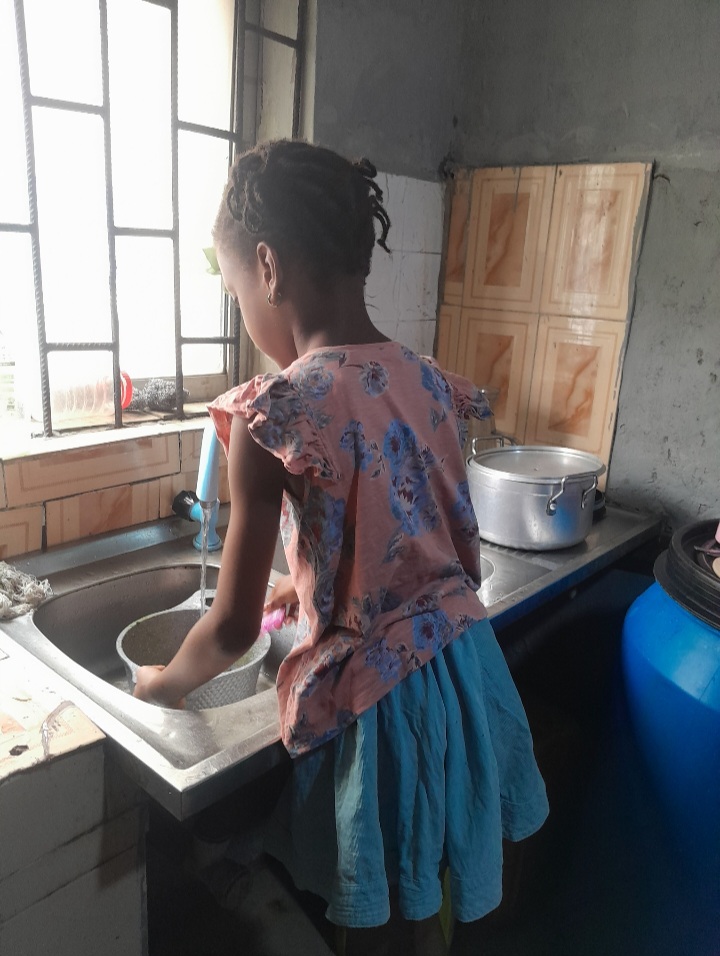
One of the simplest examples in my home involves washing dishes.
My daughter absolutely dislikes washing some of our big soup pots and plates.
And I completely understand why.
After cooking, some of those pots can be greasy, messy, and according to her very, very slimy.
There have been moments when I have looked at her standing at the sink and thought, You know what? Let me just do this myself.
It would be faster.
It would probably be quieter.
And I wouldn’t have to listen to the complaints.
But then I remind myself that I’m not just raising a child who needs to get through today’s chores. I’m raising a future adult.
So instead of taking over, I stay nearby.
Sometimes I encourage her.
Sometimes I remind her to keep going.
Sometimes I simply let her complain while she continues washing.
The goal isn’t the perfectly clean pot.
The goal is helping her learn:
“I can do difficult things even when I don’t like how they feel.”
That is grit.
And sometimes grit is developed at the kitchen sink.
If you’re looking for more practical ways to help children develop resilience through everyday life, read [Teaching Resilience to Kids].

Practical Ways to Raise Intentional Kids with Grit
1. Don’t rush to solve every problem.
When your child struggles with homework, a puzzle, a shoe, or a difficult task, pause before jumping in.
Try saying:
“I know this is difficult. Let’s think about what you can try next.”
You are supporting them without taking over.
2. Allow reasonable natural consequences.
If your child forgets something that they were responsible for remembering, don’t always rush to rescue them.
There are situations where parents absolutely need to intervene, especially when safety is involved. But when the consequence is small and safe, allowing children to experience it can teach responsibility.
3. Praise persistence.
Instead of only saying, “You’re so smart,” try:
“You didn’t give up even when it became difficult.”
This helps children understand that effort and perseverance matter.
4. Give children age-appropriate responsibilities.
Chores aren’t simply about getting help around the house.
They can teach responsibility, patience, independence, and the understanding that every member of a family contributes.
And yes, sometimes that means washing the slimy soup pot.
How to Raise Intentional Kids Who Think Beyond Themselves
Grit teaches children how to handle difficulty.
Empathy teaches them to notice the people around them.
Children are naturally self-focused. A young child doesn’t automatically think, “I wonder how my sister feels about this.”
They have to learn it.
And if we want children who grow into compassionate adults, we have to intentionally teach them to look beyond themselves.
One of the most powerful parts of how to raise intentional kids is teaching them to notice when someone else needs help.
My Daughter and the Lost Little Girl
There was a moment that really made me stop and think about this.
My daughter came home guiding a little girl who was around three years old and appeared to be lost.
My mama brain immediately went into action.
Where is this child’s family?
How did she get here?
Is she safe?
What do we need to do?
But underneath all those questions was something else I couldn’t ignore.
My daughter had noticed her.
She could have walked past.
She could have ignored her.
Instead, she saw a little child who appeared to need help and did something about it.
That moment reminded me that empathy isn’t only something we teach through lectures.
We build it through repeated everyday habits.
We teach our children to notice.
We teach them to care.
And we teach them that other people’s feelings matter too.
How to Raise Intentional Kids with Everyday Empathy
Teach children to notice emotions
When siblings argue, don’t immediately focus only on who started it.
Sometimes ask:
“Look at your sister’s face. How do you think she feels right now?”
Ask questions that move beyond “How was school?”
After school, instead of only asking about grades, homework, or what your child did, try questions such as:
- “Did you notice anyone who needed help?”
- “Did someone make you laugh today?”
- “Did you help anyone today?”
- “Was anyone sitting alone?”
- “What was one kind thing someone did for you?”
These questions train children to pay attention to the people around them.
Make helping part of family life
Empathy becomes much more powerful when children practice it.
If one sibling is struggling, encourage the other to help.
If someone is sick, let the children participate in caring for them in an age-appropriate way.
If you are preparing food, allow them to help.
If a younger sibling needs something, teach an older child how to assist without making them feel like a second parent.
Small acts of service teach a big lesson:
We don’t live only for ourselves.
How to Raise Intentional Kids with Strong Faith
Grit teaches children to keep going.
Empathy teaches them to care.
Faith gives them a foundation for why those things matter.
You can raise a hardworking, compassionate child, but children also need a strong sense of what they believe and why they believe it.
For Christian families, faith isn’t supposed to be something children only experience at church.
It should become part of everyday family life.
When children are young, much of their faith is borrowed from their parents.
They pray because we pray.
They attend church because we take them.
They learn Bible verses because we teach them.
But eventually, children begin asking their own questions.
And that’s actually a good thing.
Our goal isn’t simply to raise children who can repeat what we believe.
We want to raise children who understand their faith and gradually develop their own convictions.
Helping Children Develop Strong Spiritual Convictions
One thing I don’t want my children to believe is that asking questions about God means they are being disrespectful or rebellious.
Children are curious.
Sometimes they will ask questions that leave us thinking, Where did that one come from?
They may ask:
“Why does God allow this?”
“How do we know the Bible is true?”
“Why do we have to pray?”
“Why does God say we shouldn’t do this?”
Instead of shutting the conversation down, create room for them to think.
You don’t have to have every answer.
You can say:
“That’s a really good question. I don’t know the answer yet, but let’s learn about it together.”
That teaches children that faith and thoughtful questions can exist together.
Model the Faith You Want Your Children to Have
Our children learn far more from what they see than from what we say.
They notice how we respond when we are angry.
They notice whether we apologize when we are wrong.
They notice how we treat people who cannot do anything for us.
They notice whether prayer is something we actually turn to when life becomes difficult.
They notice whether our faith affects our decisions at home.
We don’t need to pretend to be perfect parents.
In fact, showing children what it looks like to admit, “I was wrong. I’m sorry,” can be a powerful lesson in humility.
The faith we want our children to carry into adulthood needs to be visible in the way we live today.
What If Your Children Push Back?
Let’s be honest.
When you start becoming more intentional about parenting, your children may not clap for you.
They may complain.
They may cry.
They may negotiate.
They may suddenly develop a very impressive list of reasons why they cannot possibly wash that particular plate.
I’ve experienced this in my own home.
When my daughter complains that the soup pots are too slimy, my first temptation can be to say, “Fine. I’ll do it.”
Because sometimes, Mama just wants peace.
But parenting isn’t always about keeping the peace in the moment.
Sometimes we have to keep the boundary while still offering connection.
I like to think of it as:
Acknowledge the feeling. Hold the boundary. Stay close.
For example:
“I know you don’t like how that feels. I understand that it is uncomfortable. But this is your responsibility, and you can do it. I’ll stay here with you.”
That response communicates something very different from:
“Stop crying and just do it.”
The first teaches:
“Your feelings are valid, and you are still capable.”
That is an important lesson.
Our children don’t need parents who eliminate every uncomfortable feeling.
They need parents who teach them how to move through those feelings.
Intentional Parenting Happens in Ordinary Moments
Sometimes we think intentional parenting requires elaborate activities, expensive programs, or long family meetings.
It doesn’t.
Intentional parenting can look like:
A child washing dishes even though the texture bothers her.
A sibling helping another sibling instead of laughing at them.
A parent allowing a child to experience a small consequence instead of rushing to fix it.
A family praying together after a difficult day.
A mother apologizing after losing her temper.
A child being encouraged to ask questions about faith.
A child noticing someone who needs help.
These moments may seem small.
But childhood is made up of small moments.
And those small moments become habits.
Those habits become character.
And character eventually influences the adults our children become.
Raising Tomorrow’s Adults Starts Today
At the end of the day, I’m not simply trying to raise children who obey me while they are under my roof.
I want to raise children who can eventually make wise decisions when I’m not standing beside them.
I want them to know how to keep going when something is difficult.
I want them to notice when someone else is hurting.
I want them to understand that their choices affect other people.
And I want their faith to become something deeper than simply doing what Mama and Daddy taught them to do.
That is why learning how to raise intentional kids matters so much.
We are not just managing today’s tantrum, sibling argument, messy kitchen, forgotten homework, or bedtime battle.
We are laying foundations for tomorrow.
So when your child complains about the chore, stay patient.
When they struggle with something, resist the urge to immediately rescue them.
When they hurt someone, teach them to notice the other person’s feelings.
When they ask difficult questions about faith, listen.
And when you make mistakes, let them see you own them.
The work may feel ordinary.
Sometimes it may even feel exhausting.
But one day, the child standing at your kitchen sink, complaining about a slimy pot, will become an adult who has to face difficult things without you.
And when that day comes, you won’t be able to solve every problem for them.
But you can give them something better:
the confidence to persevere, the heart to care, and the faith to remain grounded.
That’s the kind of intentional parenting worth doing.