Disclaimer:Iam a parent sharing my personal exeperience.Th econtenton Honeyberry Blog is for informational and should not be taken as professional medical orlegal advice
Finding God in the Chaos of Parenting: How to Stay Close to Him
Parenting has a way of consuming every single inch of your day.
One child is searching everywhere for a missing school shoe, another is calling out for breakfast, while the youngest is crying for attention. Meanwhile, the laundry pile keeps growing higher, dirty dishes are sitting in the sink, and a living room you spent time cleaning earlier somehow turns chaotic again within minutes.
Then come the days when your children fall sick. Those days hit differently.
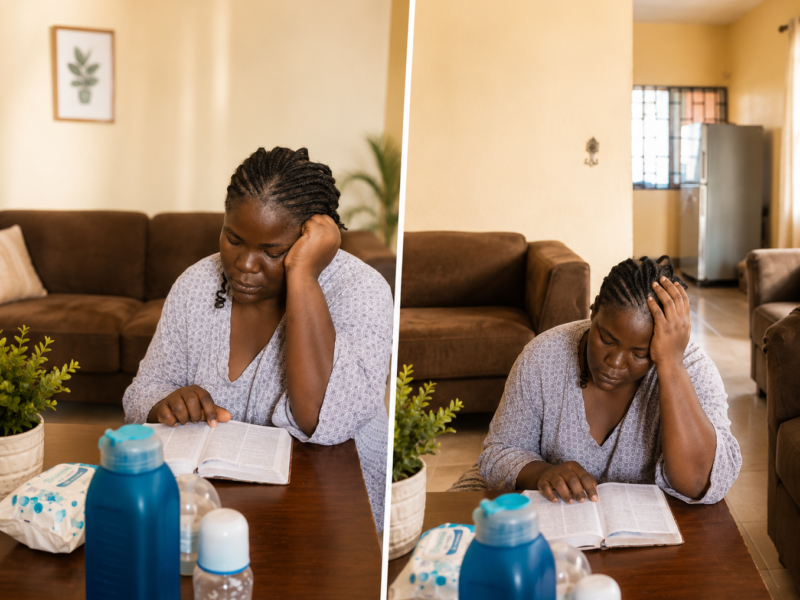
Recently, both of my daughters fell ill at the same time. As a mother, that heavy, restless feeling in your chest is hard to put into words. The daily noise of parenting suddenly fades, replaced by a deep hyper-awareness. You track every little detail: how they look, whether they are eating, how their body temperature feels, and whether they look even slightly brighter than they did two hours ago.
You desperately want to take the sickness away, but you quickly realize you cannot control everything. What you can do is care for them, seek proper medical guidance from reputable health resources, make them comfortable, stay by their side, and pray.
Moments like these serve as a gentle reminder that finding God in the chaos of parenting does not require escaping the mess. It means realizing He is right there with you inside it.
When Parenting Feels Overwhelming, Turn Toward God
We often imagine quality time with God as a quiet room, an open Bible, and an uninterrupted hour of calm prayer.
Motherhood rarely works that way.
Just as you sit down to pray, someone calls out, “Mummy!” You open your Bible, and a child starts crying or asking for water. What was supposed to be a peaceful morning quickly turns into a hectic day.
It is easy to feel like you are failing spiritually when quiet moments are hard to come by. But God does not only meet us in silence.
He meets us while we stir a pot on the stove, wash dishes, settle a toddler meltdown, or sit beside a sick child. He meets us when we are so exhausted that our only prayer is a whispered, “Lord, help me.”
Philippians 4:6–7 on Bible Gateway reminds us to bring our worries to God through prayer instead of carrying them alone. It does not mean a tough day instantly becomes easy, but it guarantees you will not have to face it by yourself.
When Real-Life Pressures Pile Up
Parenting is not just about managing daily schedules; it is about carrying the heavy weight of real life.
There are seasons when bills arrive and school fees are due, but there is no steady income in sight. Worry keeps you awake at night, trying to figure out how to stretch what little you have left.
Then there are days when a child’s continuous misbehavior tests your very last drop of patience. You are trying to correct them gently, but inside, your mental container is completely full.
Add to that the relentless, non-stop cycle of house chores, cooking, cleaning, washing, sweeping without any extra hands to help. You finish one chore only to see three more waiting for you, leaving you physically drained and emotionally spent.
In those raw, overwhelming moments, turning to God is not about pretending everything is fine. It is about laying down the crushing anxiety of provision, asking for supernatural patience when your temper is short, and leaning on His strength just to get through the domestic chores of the day.
When Your Children Are Sick, Your Prayers Change
Watching your child unwell touches a completely different part of your heart.
When both of my girls were down, I could not just turn off the anxiety. My mind kept racing with questions: When will they bounce back? Are they getting enough rest? Will they eat something small?
You can try your best to stay calm, but your heart is constantly whispering, “Please Lord, let my children be fine.”
This is where trusting God becomes deeply personal. It is the moment you drop all fancy words and say:
-
“Lord, I need You right now.”
-
“Please grant me wisdom to care for them well.”
-
“Provide for our family and give me strength to keep going.”
Whether your prayer is a long devotion or a single sentence spoken between duties, God listens to a sincere heart. Isaiah 41:10 on Bible Gateway offers great comfort here, reminding us that God stays close, strengthens us, and upholds us when we feel completely helpless.
Finding God in the Chaos of Parenting Means Asking for Wisdom
Before having children, it is easy to assume you will have all the answers mapped out. Then reality sets in.
Suddenly, you are making constant decisions every single hour: correcting behavior without crushing their spirit, managing emotional outbursts, settling endless sibling rivalries, and guiding them through mistakes often while running on very little sleep.
I have learned the hard way that relying solely on my own strength or intellect is never enough. Proverbs 3:5–6 encourages us to trust the Lord with all our heart rather than leaning only on our personal understanding.
We do not always understand why a child is acting out, or which discipline method will work best in a given moment. That is why we must continuously ask God for discernment to look past the surface behavior and address their hearts.
God Is Present Even in Sibling Conflict
Not every parenting challenge is a major crisis. Sometimes it is two children arguing over a small toy, with voices rising and someone ending up in tears.
These disagreements can be thoroughly draining, but they are also incredible teaching opportunities. Sibling fights are not just annoying interruptions to our routine; they are the exact moments where character values like patience, kindness, and forgiveness are built.
If you are currently navigating this noisy stage in your home, check out my complete guide on how to handle sibling fights and help children resolve conflicts.
Our ultimate goal isn’t raising children who never disagree, but raising children who know how to resolve conflict peacefully and with grace. And honestly, while we teach them self-control, God uses those same moments to refine our own patience as parents.
Teaching Our Children Empathy and Grit
Raising thoughtful, caring children requires steady intentionality. It means helping them look beyond their immediate self-interest (“She took my toy!”) and gently asking guiding questions:
-
“How do you think your sister felt when that happened?”
-
“What can you do right now to make things right?”
-
“How would you want someone to treat you if you were in her shoes?”
Empathy is not taught through one massive lecture; it develops through small, everyday interaction a genuine apology, a comforting hug, or a simple gesture of kindness. You can read more about building this culture at home in my article on teaching children empathy through everyday moments.
Alongside empathy, our children need resilience. When we encourage our children to keep trying after something goes wrong, we are helping them build grit.
-
A child struggling with schoolwork learns to say, “Let me try one more time.”
-
A child who loses a game learns that losing is not the end of the world.
-
A child who makes a mistake learns that mistakes are simply stepping stones to growth.
For practical, daily strategies on this topic, feel free to read my article on teaching children grit and resilience.
There is something deeply humbling about teaching our children perseverance while remembering that we need perseverance ourselves. Some seasons of motherhood require pure grit days when we keep going not because we feel strong, but because we trust God to provide the strength needed for that day.
Let Conviction Guide Your Parenting Decisions
Parenting goes far beyond managing daily behavior; it is ultimately about character formation.
Every now and then, we have to pause and ask ourselves crucial questions: What kind of people are we raising? What values do we want them to stand for when doing the right thing gets difficult?
This is where conviction matters. I want my children to understand that character counts even when no one is watching. Truth matters. Respect matters. Taking responsibility matters. Faith matters.
If you want to dive deeper into this idea, take a look at my article on teaching children conviction and strong values.
Our children learn far more from our actions than our words. They observe how we react when we are tired or frustrated, whether we own up to our mistakes and apologize, and how we extend grace to others. Motherhood often acts as a mirror, showing us areas where God is still working on our own hearts.
You Don’t Need a Perfect Quiet Time to Stay Close to God
If you are a mother feeling guilty about your prayer life, please hear this: God is not disappointed in you because motherhood has made your schedule packed and unpredictable.
While spending dedicated, quiet time with God is wonderful, your relationship with Him does not pause simply because your children need your full attention.
You can talk to God while preparing meals in the kitchen. You can listen to Scripture while folding laundry or doing chores. You can pray quiet blessings over your children while sitting beside their beds at night or watching them sleep.
These moments may seem brief, but they are genuine touchpoints of connection with your Heavenly Father.
Praying through motherhood does not always look like an hour-long study session. Sometimes it is five quiet minutes in the morning; other times it is a single sentence whispered between daily responsibilities. Both are precious to God.
Give Yourself Grace When You Miss the Mark
There will be days when you lose your temper, raise your voice, or handle a challenging situation poorly.
When that happens, avoid getting trapped in a cycle of guilt and self-condemnation. Apologize to your child, repair the connection, learn from the experience, ask God for grace, and start fresh.
Your children do not need a perfect mother who never makes mistakes; they need a mother who is authentic and willing to grow alongside them.
God is using our parenting journeys to shape us too. Through our daily struggles, we are learning patience, learning to pause before reacting, and learning to rely on His wisdom rather than our own immediate reactions.
Finding Peace in Motherhood Does Not Mean Having a Peaceful Life
This is a vital distinction every mother needs to understand.
Finding peace in motherhood does not mean your home will always be tidy, your children will always cooperate, or that financial stress, sickness, and fatigue will never cross your doorway. Peace does not mean the absence of chaos; it means the presence of God inside it.
You can feel worried about financial difficulties or an ill child and still choose to pray. You can be physically exhausted from chores and still trust in God’s provision. You can feel uncertain about the future and still hold onto your faith.
When you feel spiritually dry or disconnected, do not let guilt keep you away from God. Simply turn back to Him. Speak to Him honestly about where you are.He understands the weight you carry as a mother, and He is always ready to receive you with open arms.
You do not have to carry the weight of parenting all by yourself. Turn every worry into a prayer, celebrate the small victories, and remember that finding God in the chaos of parenting begins by realizing He is walking right beside you through every single season.
How do you stay connected with God when financial stress or physical exhaustion hits? I would love to read your stories and thoughts in the comments below!