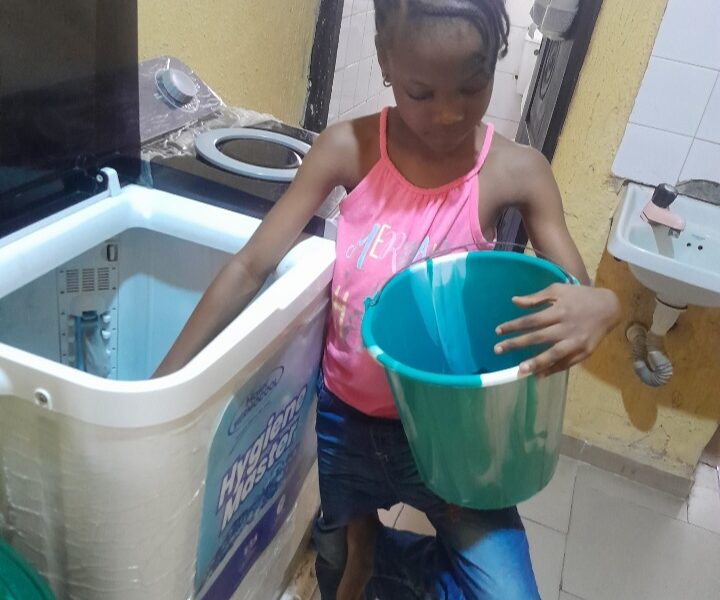
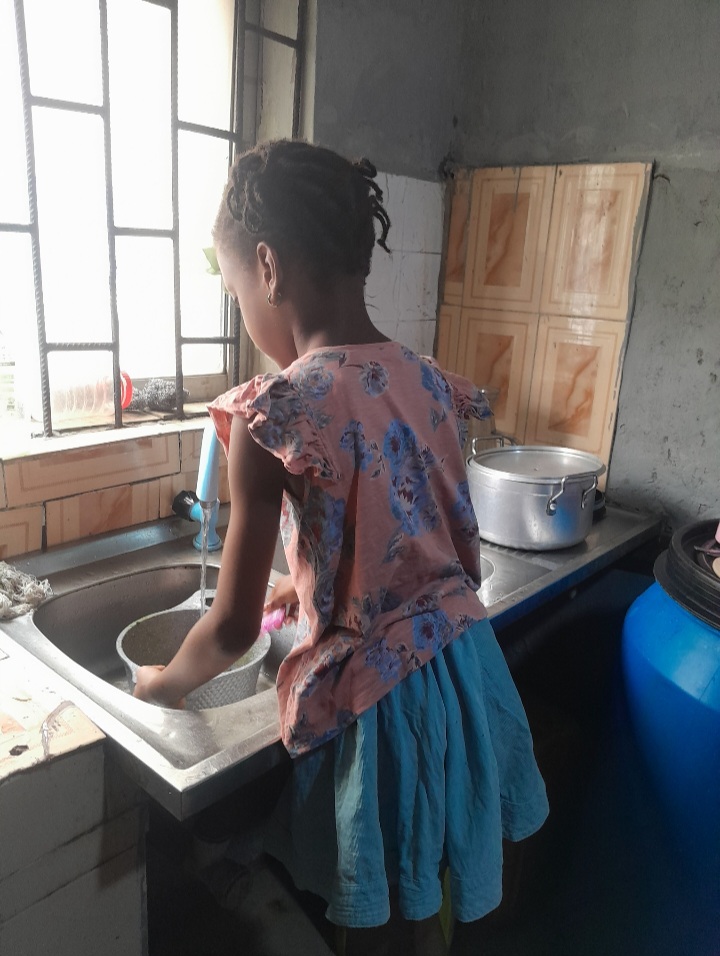
Teaching Resilience to Kids Through Everyday Chores (What Washing Slimy Pots Taught My Daughter About Life)
Teaching resilience to kids doesn’t always happen during big life lessons. Sometimes, it begins with something as ordinary as washing a slimy pot. One afternoon, my daughter stood in front of our kitchen sink, holding a greasy soup pot with only two fingers. “Mummy, I can’t wash this,” she said, making the funniest face. In that moment, I almost took the sponge from her. But I realized that this wasn’t just about dishes it was an opportunity to build perseverance, responsibility, and confidence.
As parents, we often dream about raising confident, responsible, emotionally strong children. We pray they’ll become adults who don’t give up when life gets difficult. Yet real resilience isn’t built during motivational speeches or once-in-a-lifetime life lessons.
It’s built on ordinary everyday activities. It’s built while folding laundry, making beds, packing school lunchboxes, cleaning up toys, and washing dishes that nobody wants to touch.
Those seemingly insignificant tasks quietly become training grounds for perseverance, responsibility, patience, and grit. And honestly? Sometimes the greatest lesson isn’t even for our children. Sometimes it’s for us as parents, because allowing our children to struggle even in small ways can feel far more uncomfortable than the struggle itself.
Why Teaching Resilience to Kids Has Never Been More Important
We live in a world designed to make life easier. Need groceries? They’re delivered. Need food? Someone brings it to your doorstep. Need entertainment? Thousands of videos are available within seconds. Need answers? Artificial intelligence can generate them almost instantly.
Convenience isn’t necessarily bad, but when children become accustomed to immediate comfort, they may begin expecting life to always cooperate with them.
Unfortunately, real life doesn’t.
Friendships become difficult. Marriage requires sacrifice. Careers involve setbacks. Parenting demands endurance. Faith requires perseverance. Every worthwhile achievement involves discomfort.
That’s exactly why teaching resilience to kids has become one of the most valuable gifts intentional parents can offer. Resilience isn’t simply about “being tough.”
According to the American Psychological Association Guide on Building Resilience in Children, resilience is the ability to successfully adapt to difficult experiences through mental, emotional, and behavioral flexibility. It isn’t something children are born with; it is developed over time through supportive relationships and repeated opportunities to overcome manageable challenges.
Instead of removing every obstacle, we can help our children learn how to face obstacles with courage.
Honeyberry Truth: We aren’t raising children for today’s comfort. We’re raising adults for tomorrow’s challenges.
The Hidden Cost of Always Rescuing Our Children
Every parent knows the feeling: your child struggles, your heart aches, and your immediate instinct says, “Let me do it.”
-
Maybe they’ve forgotten their homework.
-
Maybe they’re frustrated by a difficult puzzle.
-
Maybe they can’t zip their jacket or tie their shoes.
-
Maybe they’re standing beside a sink full of slimy pots.
Our natural response is to rescue because rescuing feels like love. But sometimes, rescuing actually interrupts growth. There is a fundamental difference between helping and over-helping. Helping teaches; over-helping replaces learning.
When we constantly remove every frustration, we unknowingly communicate something dangerous: “I don’t think you can handle this.” That message slowly chips away at self-esteem. Discovering how positive discipline builds confidence in children starts with trusting them to handle their own small responsibilities.
Research compiled by the Harvard Center on the Developing Child demonstrates that excessive parental intervention, sometimes called overparenting or “snowplow parenting” can reduce children’s confidence and problem-solving abilities later in life. Instead of learning “I can figure this out,” they begin believing “Someone will always figure it out for me.”
Why Small Daily Struggles Build Strong Kids
Children don’t suddenly become resilient at eighteen—resilience grows little by little.
-
Every difficult chore…
-
Every delayed gratification…
-
Every responsibility completed without quitting…
All of these become tiny bricks that eventually build incredible character.
Think about how muscles grow: nobody becomes physically stronger by avoiding resistance. Muscles grow because resistance stretches them, and character works the exact same way. Without resistance, there is no resilience. Without responsibility, there is little maturity.
Children who experience manageable challenges while knowing a loving parent is nearby often develop stronger emotional regulation. That’s why everyday household responsibilities matter far more than we realize. They aren’t just chores—they’re character lessons wearing work clothes.

Teaching Resilience Through Household Chores
If someone asked me where resilience training begins, I wouldn’t point them toward a leadership conference. I’d point them toward my kitchen sink.
My daughter absolutely dislikes washing our large soup pots not because they’re heavy or complex, but simply because they’re slimy. She’ll scrub plates, rinse cups, and wash spoons happily, but the moment she sees oily soup residue, the drama begins:
“Ewww, Mummy! I can’t touch this! It’s disgusting! Please, can you wash it instead?”
Now, if I’m honest, I completely understand her. Even I don’t enjoy washing greasy pots! But every single time I feel tempted to rescue her, I remind myself that this moment isn’t really about dishes. It’s about determination. It’s about learning that unpleasant feelings don’t have to control our choices.
So instead of taking over, I stay beside her. Sometimes I smile, sometimes I encourage, and sometimes I remind her: “You can do hard things.”
How Chores Help in Teaching Resilience to Kids
Many parents think chores simply teach children how to clean, but they develop essential core skills:
-
Delayed gratification and Self-control
-
Patience and Problem-solving
-
Perseverance and Emotional regulation
When children repeatedly complete tasks they’d rather avoid, their brains learn something powerful: “I don’t have to quit just because something feels uncomfortable.”
As Jesus taught in the Bible, faithfulness in little things prepares us for greater responsibilities (Luke 16:10). Whether or not you frame chores in spiritual terms, the principle is timeless: consistent responsibility in small tasks builds character for bigger ones.
My Job Isn’t to Rescue—It’s to Coach
One parenting mindset changed everything for me. I stopped asking, “How can I make this easier?” and started asking, “How can I help my child grow through this?”
Coaching doesn’t mean abandoning our children.it means walking beside them without carrying the entire load.
When my daughter complains or sighs dramatically, I listen and acknowledge her feelings, but I don’t remove the responsibility. Instead, I remind her: “This feels unpleasant, but you are capable.” Confidence doesn’t come from never struggling; confidence comes from surviving struggles you once thought you couldn’t handle.
Teaching Resilience to Kids During Sibling Conflicts
Chores aren’t the only place where resilience is built. If you have more than one child, you know conflict often arises over a toy, the remote, or simply because a sibling looked at them “the wrong way.”
Instead of letting sibling disagreements send us into panic mode, we can reframe them as daily opportunities for practice. Every disagreement gives children a chance to learn how to handle sibling fights without taking sides while sharpening their communication, empathy, and self-control.
       [ Disagreement Occurs ]
                 │
                 ▼
       [ Resist Rescuing ] ──► Pause & Breathe
                 │
                 ▼
       [ Ask Guiding Questions ] ──► "What happened?" / "How do they feel?"
                 │
                 ▼
       [ Encourage Compromise ] ──► Child-Led Problem Solving
Resist the Urge to Become the Family Referee
Instead of immediately giving answers or handing out consequences, slow down and ask guiding questions:
-
“What happened?”
-
“How do you think your sibling feels right now?”
-
“What solution can both of you agree on?”
When we stop rescuing every uncomfortable moment, children start offering compromises and solving disagreements independently.
Managing Your Own Anxiety While Teaching Resilience
Watching your child struggle is emotionally exhausting. When they’re frustrated, something inside us becomes uncomfortable too, and our minds start racing with doubt.
However, discomfort doesn’t mean your child is being harmed—often, it simply means growth is happening.
                  ┌───────────────────────────────┐
                  │    Child Experiences          │
                  │    Frustration or Struggle    │
                  └──────────────┬────────────────┘
                                 │
                 ┌───────────────┴───────────────┐
                 │                               │
                 ▼                               ▼
    [ Parental Impulse: RESCUE ]    [ Parental Role: COACH ]
    • Removes the obstacle          • Validates feelings
    • Creates dependency            • Holds firm boundary
    • Communicates incapacity       • Builds lasting resilience
Teaching Resilience to Kids Without Rescuing Them
Frustration is loud, it looks like whining, complaining, deep sighs, or tears. None of those automatically mean we should rescue them.
Guidance from the CDC’s Positive Parenting Strategies emphasizes that maintaining a calm, supportive environment during manageable stress helps children build long-term emotional stability. Your calm presence teaches them that difficult feelings are temporary.
Consistency Between Parents Builds Safety
Children feel secure when expectations remain consistent. If one parent says yes while the other says no, children quickly learn to test boundaries.
One area where consistency makes a massive difference is bedtime. By bedtime, everyone’s patience is running low, which is why clear boundaries matter most. When parents remain united on rules—whether it’s managing bedtime requests or learning how to reduce screen time without daily battles—children feel safer because their environment is predictable.:
Simple Ways to Start Teaching Resilience to Kids Today
    │                   TWO-STEP COACHING MODEL                   │
    ├──────────────────────────────┬──────────────────────────────┤
    │  STEP 1: Acknowledge         │  STEP 2: Hold Boundary       │
    │  "I see this feels hard."    │  "I'm here, but you're doing │
    │                              │   it."                       │
    └──────────────────────────────┴──────────────────────────────┘
-
Step 1: Teaching Resilience to Kids Starts with Empath
“I know washing that pot feels really unpleasant right now.” (This helps your child feel heard without removing the job).
-
Step 2: Teaching Resilience to Kids Requires Consistency
“I’ll stay nearby while you do it, but I’m not going to do it for you.” (You offer presence, not rescue).
3 Practical Ways to Start Teaching Resilience Today
-
Normalize Struggle: When your child gets stuck, remind them: “This is difficult, but difficult doesn’t mean impossible.”
-
Allow Natural Consequences: If your child forgets their homework, let the natural outcome teach them responsibility instead of rushing to rescue them.
-
Praise Effort Over Results: Swap “You’re so smart” with “I’m so proud of how you kept trying even when you wanted to quit.” This aligns with teaching empathy and character through everyday habits.
Common Mistakes Parents Make
-
Doing Everything for Your Child: Love isn’t measured by how many responsibilities we remove.
-
Expecting Perfection: Resilient children aren’t children who never fail—they’re children who keep trying after they fail.
-
Being Inconsistent: If chores are optional one day and mandatory the next, children receive mixed signals. Predictability builds trust.
What Scripture Teaches About Perseverance
Throughout Scripture, perseverance is presented as something that grows through testing—not by avoiding it. As James 1:2–4 encourages us:
“Consider it pure joy… whenever you face trials… because you know that the testing of your faith produces perseverance.”
Teaching a child to finish washing a slimy pot may seem small today, but grounding them in these daily habits connects directly to teaching children spiritual conviction and lasting values.
Frequently Asked Questions
At what age should children start doing chores?
Children can begin helping with simple tasks between ages 2 and 3, such as putting toys away or placing clothes in a laundry basket. As they grow, chores should become more age-appropriate and gradually more challenging, which also encourages independent play and self-reliance in young children.
How do chores build resilience?
Chores teach children perseverance, delayed gratification, responsibility, problem-solving, and confidence. Completing tasks they don’t enjoy helps them learn that discomfort doesn’t have to stop them from finishing what they started.
What if my child refuses to do chores?
Stay calm, acknowledge their feelings, and consistently hold the boundary. Avoid power struggles or rescuing them from age-appropriate responsibilities. Consistency over time usually produces better results than constant negotiation.
Should I pay my child for regular household chores?
Many parenting experts recommend separating everyday family responsibilities from paid work. Regular chores teach contribution to the family, while optional extra tasks can be used as opportunities to earn money or manage allowance.
Final Thoughts: Raising Adults for Tomorrow
Teaching resilience to kids isn’t about making childhood harder—it’s about preparing them wisely for adulthood. Every bed made, every toy put away, every disagreement worked through, and every slimy pot washed becomes another deposit into their character account.
Our greatest success won’t be measured by how comfortable we made our children today, but by how confidently they stand when life becomes uncomfortable tomorrow.