The benefits of boredom for children were not something I appreciated until I stopped trying to entertain my daughters every minute of the day.
Like many parents, I thought I was doing the right thing by always keeping them busy. If they weren’t playing with toys, they were watching TV. If the TV was off, I felt like I needed to find another activity before I heard those familiar words:
“Mommy, we’re bored!”
To be honest, having the television on made life easier for me. While they watched their Favorite cartoons, I could wash dishes, cook dinner, tidy up the house, or spend time with the baby without too many interruptions.
It felt like a win for everyone. Until I realized they didn’t really know how to entertain themselves anymore.
The moment I switched the television off or take their tablets from them, the complaints began.
“Mommy, there’s nothing to do.”
“Mommy, we’re bored.”
Sometimes they cried or argued with each other, and there were days they followed me from room to room, hoping I would eventually give in and turn the TV back on.
And believe me, I was tempted. There were days I looked at the remote and thought, maybe just one cartoon won’t hurt. But deep down, I knew I wanted something different for my girls. I wanted them to enjoy the kind of childhood I remembered growing up where fun wasn’t something that came from a screen, but something you created with your imagination.
So, I stayed consistent. The first few days were rough. The second week was a little better.
When Boredom Turned into Pretend Play
Then one afternoon, something happened that completely changed my mind about boredom.
I was in the kitchen preparing dinner when the house suddenly became very quiet. Now, if you’re a parent, you know that silence can either be a blessing… or a warning sign!
I quickly wiped my hands and went to check on them. Instead of watching television, I found my sitting room transformed into a classroom.
My eldest daughter had somehow become the teacher. She was holding one of her notebooks, calling attendance, asking questions, and even correcting her younger sister just the way her own teacher does in school. Her sister sat so seriously on the chair, raising her hand before answering.
I couldn’t stop laughing.
The next day, the classroom disappeared. In its place was a restaurant. Plastic bowls became cooking pots. Empty containers became ingredients. One daughter cooked while the other carefully served imaginary jollof rice to customers which happened to be me, their dolls, and anyone else who walked past.
Another afternoon, I walked in to find one of them gently carrying her baby doll on her back with a small wrapper. She was patting the doll softly and saying, “Shhh… my baby is sleeping.” A few minutes later she pretended to feed the baby before laying her down for another nap.
Watching her copy the little things I do every day made me smile. Children really are watching us, even when we don’t realize it.
What amazed me most wasn’t just the pretend play. It was how well they worked together. Instead of sitting quietly side by side watching television, they were talking, planning, laughing, disagreeing, compromising, and creating. They were building entire imaginary worlds using nothing more than dolls, chairs, blankets, and their own ideas.
That was the moment I realized boredom hadn’t taken anything away from my children. It had given something back.
It gave them the chance to think It gives children the opportunity to imagine, solve problems, work together, and create memories instead of simply sitting back and consuming entertainment.
According to the American Academy of Pediatrics, child-led play is essential for healthy development because it supports creativity, social skills, emotional growth, and stronger parent-child relationships.
Looking back, reducing our TV time wasn’t just about limiting screens. It was about making room for something better. And that’s when I truly began to understand the benefits of boredom for children.
Why We Try So Hard to Rescue Our Children from Boredom
I think many of us parents have been conditioned to believe that boredom is something we should avoid at all costs. When our children say they’re bored, we almost feel guilty.
So, we start searching Pinterest for crafts. We buy another toy. We suggest another activity. Or, like I used to do, we reach for the TV remote because it’s the quickest way to stop the complaints.
But somewhere along the way, we’ve forgotten that boredom is not an emergency. It’s actually an invitation.
An invitation for children to ask themselves:
-
“What can I create?”
-
“What can I build?”
-
“Who can I pretend to be today?”
Those questions are where imagination begins. As I watched my daughters become teachers, chefs, mums, shopkeepers, and even doctors all within the same week. I realized they had never lacked creativity. They had simply lacked the opportunity to use it.
How Boredom Helps Children Become Better Problem Solvers
One thing I never expected after cutting back on television was how quickly my daughters started solving their own little problems. Before, the TV filled every quiet moment. If it wasn’t on, they’d come looking for me.
“Mommy, what should we do?”
“Mommy, we’re bored.”
At first, I almost fell back into my old habit of finding an activity for them. It would have been much easier to tell them to colour, bring out another toy, or simply switch the TV back on. Instead, I’d smile and say, “Hmm… I wonder what you two can come up with.”
I’ll admit they didn’t like that answer. Sometimes they’d stare at me as if I had forgotten I was their mum. Then they’d slowly walk away.
A few minutes later, I’d hear little whispers coming from the sitting room.
“Let’s play school.”
“No, let’s cook first.”
“Okay… after cooking, we’ll teach our babies.”
Without realizing it, they were doing something far more important than just playing. They were making decisions, sharing ideas, solving disagreements, and planning together.
As adults, we call these problem-solving skills, but children learn them in ordinary moments like these. Looking back, I realized I didn’t need to solve every problem for them. Sometimes, the best thing I could do was step back and let them figure things out. This is also part of teaching resilience to kids—giving them room to struggle, think, and try again.
Why Children Need Boredom to Develop Independent Play
One of my Favorite benefits of boredom for children is watching independent play happen naturally. If you’ve ever wished your child could play happily without needing you every five minutes, you’re not alone.
I used to think independent play was something children either knew how to do or didn’t. Now I know it’s a skill. And like every other skill, it develops with practice.
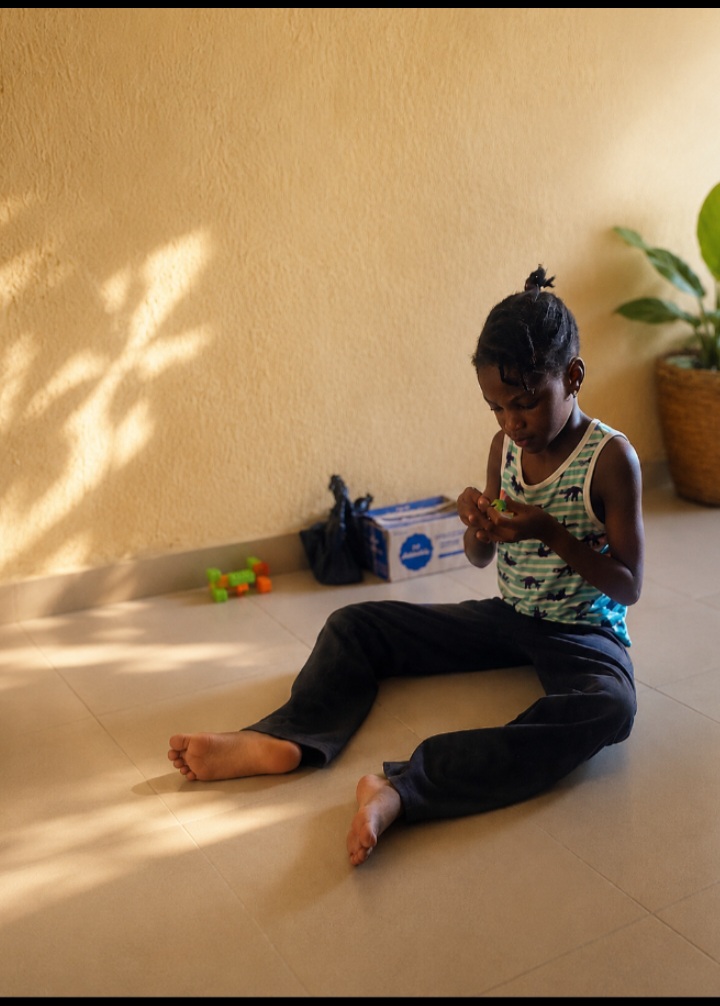
When the television became less available in our home, my daughters didn’t suddenly know what to do. They had to learn. Some days they’d wander around for ten or fifteen minutes. Then, almost like magic, an idea would appear.
One afternoon, I walked into the bedroom and found every pillow arranged neatly on the floor.
“What’s happening here?” I asked.
My youngest smiled proudly. “This is our house.”
The pillows were beds. A laundry basket was the wardrobe. A wrapper became a blanket. One sister was the mummy, and the other was visiting with her baby. For almost an hour, they played family without asking me for a single suggestion.
I stood at the door smiling because only a week earlier those same girls had insisted there was “nothing to do.” Children don’t always need us to entertain them. Sometimes they simply need enough time to discover what they’re capable of creating.
How Less Screen Time Strengthened My Daughters’ Relationship
If I’m honest, this was the biggest surprise. I expected less television. I expected more pretend play. What I didn’t expect was how much closer my daughters would become.
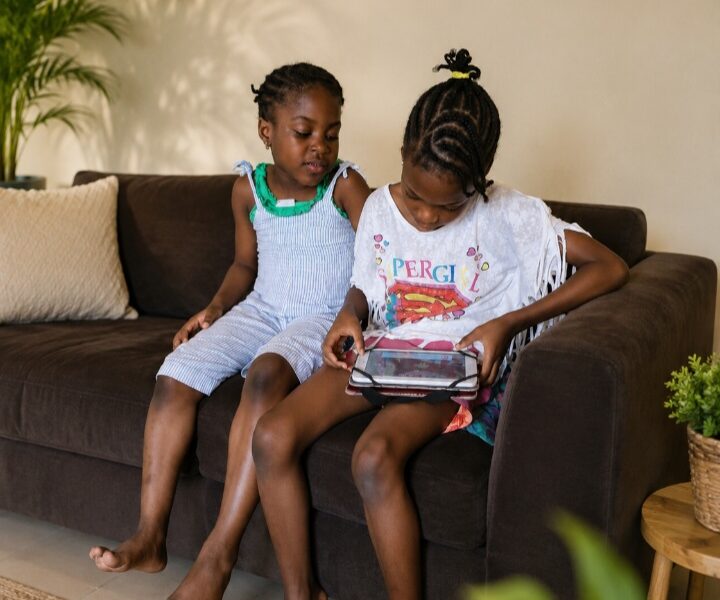
When the TV was always on, they sat beside each other. But they weren’t really together. Both of them were quietly watching someone else’s story. Now they had to create their own.
One afternoon they decided to open a restaurant. I wasn’t allowed into the kitchen because, apparently, customers were not permitted there! I sat on the sofa while they rushed back and forth carrying plastic plates, empty yoghurt cups, and toy spoons.
“Your food is almost ready,” my eldest announced very seriously.
A few minutes later, my youngest carefully placed an empty plate in front of me. “Eat before it gets cold.”
I laughed so hard. The food didn’t exist, but according to them, it was the best jollof rice in town.
On another day, they became teachers. The next day, doctors. Then mothers looking after their babies. Every game required teamwork. They had to decide who would do what.
Sometimes they disagreed. Sometimes one wanted to change the story halfway through. Instead of immediately shouting, “Mommy!”, I noticed they started working things out themselves.
Not every disagreement ended perfectly. They’re still sisters after all. But they were learning one of life’s most important lessons—that relationships grow stronger when we communicate, compromise, and listen to each other.
(If sibling disagreements are something you’re navigating too, you may also enjoy my article on How to Handle Sibling Fights Without Picking Sides).
Looking back, I can now see that the benefits of boredom for children went far beyond simply spending less time watching television.
The Surprising Truth About Toys
Can I confess something? I used to think the answer to boredom was buying another toy. A new doll, A new puzzle. A new kitchen set. Something exciting.
And don’t get me wrong seeing the excitement on my girls’ faces when they opened something new was always special. But the excitement rarely lasted. Within a few days. Sometimes even a few hours, we were right back to hearing, “Mommy, we’re bored.”
That was when I realized I had been solving the wrong problem. My daughters didn’t need more toys. They needed more opportunities to use their imagination.
Now I notice something interesting. The toys they play with the longest aren’t necessarily the
Now I notice something interesting. The toys they play with the longest aren’t necessarily the most expensive ones. Sometimes it’s a cardboard box, a blanket, a few dolls, plastic bowls from their toy kitchen, or even my old notebook, which somehow becomes a school register every single time they play teacher.
Looking back, I can clearly see the benefits of boredom for children because those quiet moments gave my daughters the space to create, explore, and discover new ways to play.
Research from the Harvard Center on the Developing Child shows that children build important thinking, social, and self-regulation skills through play and everyday interactions. Watching my daughters turn ordinary household items into entire imaginary worlds has convinced me that the simplest things often inspire the biggest ideas.
How Parents Can Help Their Children Experience the Benefits of Boredom
If you’ve read this far, you might be thinking, “This all sounds lovely, but what do I do the next time my child looks at me and says, ‘Mommy, I’m bored’?”
First of all,… don’t panic.
I know that’s easier said than done because I’ve been there. There were days when I was trying to cook, the baby needed my attention, the house was a mess, and the last thing I wanted to hear was, “Mommy, we’re bored!”
It would have been so easy to grab the remote and let the television do the entertaining. Sometimes I honestly wanted to. But now that I’ve seen what happened when I gave my daughters the chance to work through that boredom, I wouldn’t go back.
Here are a few things that have worked in our home:
-
You Don’t Have to Stop TV All at Once: You don’t have to switch off every screen overnight. Create small pockets of screen-free time maybe 30 minutes after school, an hour before dinner, or Saturday mornings. Children adjust much better when changes happen gradually.
-
Resist the Urge to Solve It Immediately: As mums, we naturally want to fix things. But every time we immediately solve boredom, we accidentally take away an opportunity for our children to think for themselves. Try replying with, “Hmm… I wonder what amazing idea you’ll come up with today.”
-
Leave Room for Open-Ended Play: Simple items offer the most freedom. A blanket becomes a tent, dining chairs become a school, and wooden spoons become microphones. The less a toy tells children what to do, the more their imagination has room to grow.
Common Mistakes That Prevent Children From Enjoying Boredom
Sometimes, without realizing it, we make boredom disappear before it has a chance to do its job. Here are three mistakes I’ve caught myself making:
-
Feeling Guilty When Your Child Is Bored: For the longest time, I believed a good mum should always have another activity ready. Now I know better. Boredom isn’t a sign that you’re failing; it’s simply part of childhood.
-
Using Screens as the First Solution: I’m not against television—my daughters still watch TV. The difference is that it no longer fills every free moment. It’s one part of their day, not the Centre of it.
-
Thinking More Toys Will Fix the Problem: Children don’t usually need another toy. They need another opportunity to imagine. Sometimes, the best thing we can give them isn’t something we buy; it’s simply time.
Frequently Asked Questions
Is boredom actually healthy for children?
Yes. Healthy boredom encourages creativity, independent thinking, problem-solving, and emotional resilience. It gives children the chance to use their imagination instead of depending on constant entertainment.
How long should children be bored?
There isn’t a magic number. The goal isn’t to leave children feeling lonely or ignored; it’s simply to give them enough unstructured time to discover what they can create before stepping in.
What if my child only wants to watch TV?
That was exactly where my daughters started. They complained, cried, and insisted there was nothing else to do. But after a little patience and consistency, everything changed. Now, some of their happiest memories are the games they invent together.
Final Thoughts: The Benefits of Boredom for Children Are Worth the Complaints
If someone had told me a year ago that I’d actually be grateful to hear, “Mommy, we’re bored,” I would have laughed. Back then, those words felt like another job for me to solve.
The benefits of boredom for children become clear when we give kids enough time and space to discover what they can do without constant entertainment.
Now, I hear them differently. They’ve become the beginning of possibility. Because I know what usually comes next.
A classroom appears in my sitting room. A restaurant opens in my kitchen. A baby doll gets wrapped carefully on someone’s back. Two little sisters begin discussing, laughing, negotiating, and creating a world that exists only in their imagination.
Every time I quietly watch them from the doorway, I’m reminded that turning off the TV didn’t take anything meaningful away from them. It gave them something far more valuable. It gave them the confidence to create their own fun, the freedom to think, and the space to grow together as sisters.
So, the next time your child sighs and says, “Mommy, I’m bored,” take a deep breath before you reach for the remote. You might just be witnessing the beginning of their next big adventure.
Before You Go…
Have your children ever surprised you with a game they invented all by themselves? I’d love to hear about it in the comments below! Your story might encourage another parent who’s wondering whether it’s okay to let their child be bored for a little while.